
10 Tourist Food Mistakes in Barcelona (And How to Eat Like a Local) in 2026
Barcelona is one of the best food cities in Europe. From fresh seafood and tapas bars to Catalan comfort food and world-class markets, it’s a dream destination for food lovers.
But here’s the catch: Barcelona is also one of the easiest cities to eat badly in as a tourist.
Between overpriced restaurants, fake “authentic” menus, and misunderstood local customs, many visitors leave thinking Spanish food is overrated — when in reality, they just ate in the wrong places.
Let’s fix that.
This guide covers the 10 most common tourist food mistakes in Barcelona, plus practical tips so you can enjoy the real flavors of the city.

1. Eating on “La Rambla”
The city’s most famous boulevard is the epicenter of tourist traps.
This is the biggest and most expensive mistake.
Restaurants along Las Ramblas are designed for high tourist turnover, not quality. Expect:
- Frozen paella
- Generic tapas
- Inflated prices
- The Mistake: Sitting at the large outdoor terraces lining the street. If you are looking for Frozen paella, Generic tapas & Inflated prices.This is for you, but if you want better food and prices. La Rambla is not for you.
- The Reality: You will likely pay double for mediocre, mass-produced food.
- The Fix: Walk just five minutes into the side streets of El Raval or the Gothic Quarter to find authentic spots. Or you can take a metro and get out of the tourist zone and join us locals try El Born, Poble Sec & Gràcia (you’ll be happy that you did)
You’ll find better food for lower prices instantly.

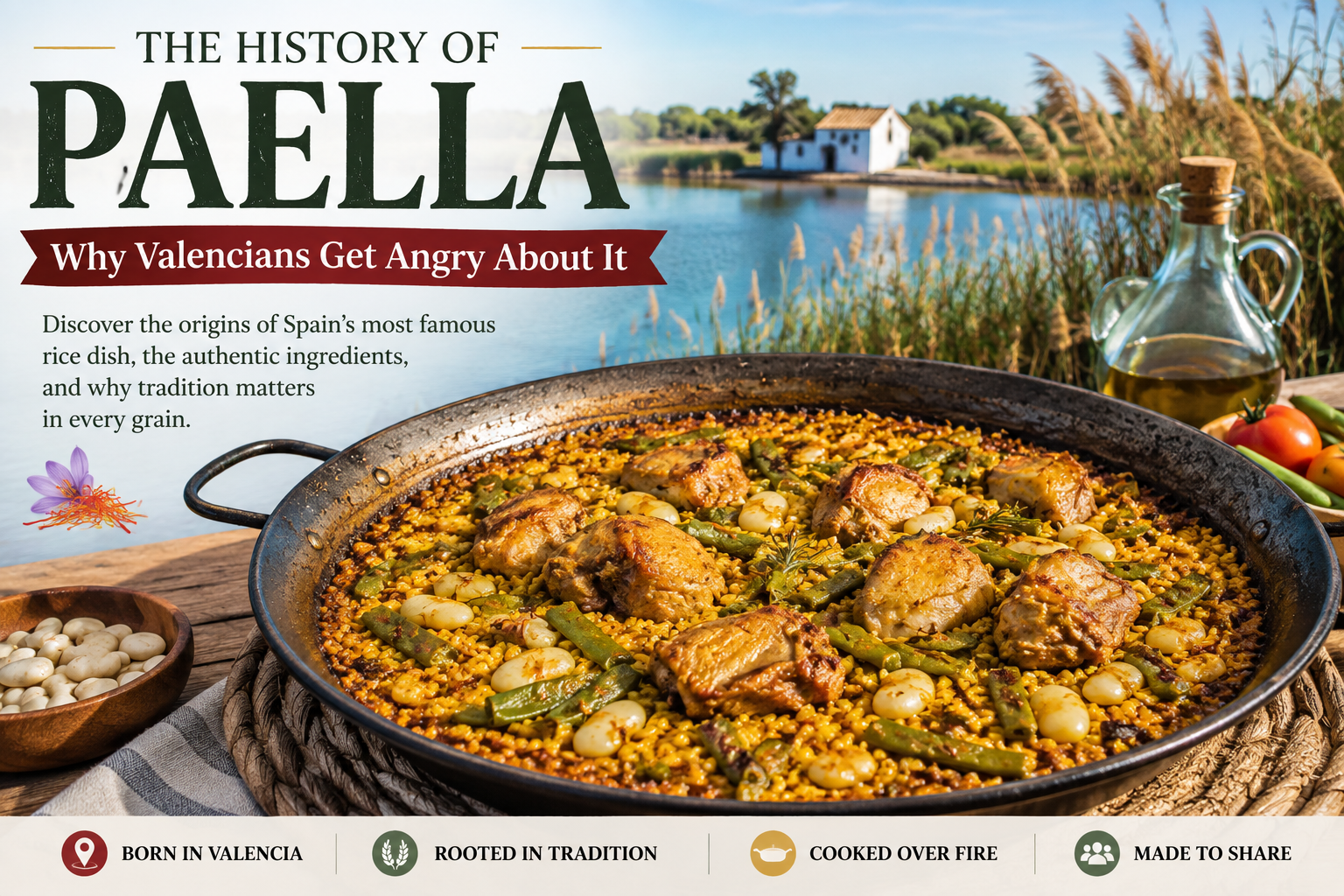
2. Ordering Paella for Dinner
This one surprises almost everyone.
In Spain, paella is traditionally a lunch dish, eaten between 1:30 and 3:30 PM.
If a restaurant serves paella at 9 PM, it’s often:
- Pre-cooked
- Reheated
- Made for tourists
Pro tip: Order paella at lunch, especially near the coast or in rice-specialist restaurants.
- The Mistake: Ordering a pan of rice at 9:00 PM.
- The Reality: Many locals believe rice is too heavy for the stomach at night. Restaurants that push paella for dinner are often reheating frozen versions (look for the “Paellador” brand signs—a huge red flag).
- The Fix: Enjoy your paella between 1:30 PM and 4:00 PM.

3.Ordering “Sangria” Every Time
Sangria is fun while tourists love it, — Sangria isn’t actually the go-to drink for locals.
- The Mistake: Assuming Sangria is the only local refreshment.
- The Reality: Locals are more likely to order a Vermut (vermouth) as an aperitif, a Cava (Catalan sparkling wine), or a Tinto de Verano (red wine with lemon soda).
- The Fix: Ask for a “Vermut casero” or a “Copa de Cava” to drink like a local.
Pro tip:
- Cava (local sparkling wine)
- Vermut (vermouth) before lunch
- House red or white wine
- Beer like Estrella or Moritz
Sangria is mostly a tourist drink.
Try this instead: Ask for “vermut de la casa” or a glass of cava.

4. Eating at Restaurants with Photo Menus
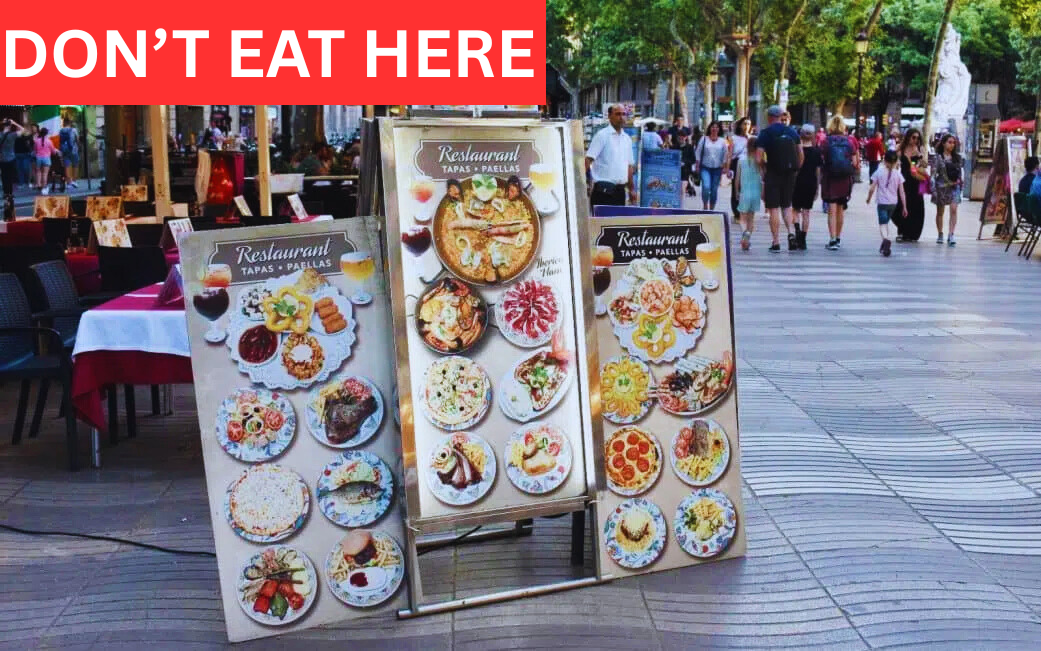
If a restaurant has: If you see a giant board outside featuring bright, glossy photos of every dish, keep walking better yet run away.
- The Mistake: Photos of every dish, Menus in 6 languages, Someone is begging you to
- come inside…it’s probably not great.These places rely on volume, not reputation.
- The Reality: High-quality Catalan restaurants rarely use photos; they rely on seasonal chalkboard menus or printed lists in Catalan and Spanish.
- The Fix: Look for hand-written menus or “Menu del Dia” boards.
Rule of thumb:
The simpler the menu and the fewer photos, the better the food.

5. Not Knowing the “Menu del Dia”
One of the best food deals in Europe you might even say This is the holy grail of Spanish dining.
- The Mistake: Ordering a la carte during a weekday lunch.
- The Reality: Most restaurants offer a fixed-price 3-course menu (including wine and bread) for a fraction of the cost.
- The Fix: Look for the Menu del Dia on weekdays. It’s usually the freshest and best-valued meal you can find. A menú del día usually includes:
- Starter
- Main dish
- Dessert or coffee
- Drink
All for €13–18.
Tourists who skip this end up paying double at dinner.
When: Weekdays, lunchtime
Where: Almost every local restaurant outside tourist zones

6. Only Eating “Spanish” Food
Barcelona is Catalan, not just Spanish.
Many visitors miss local specialties like:
- Pa amb tomàquet (tomato bread)
- Botifarra (Catalan sausage)
- Escalivada (roasted vegetables)
- Calçots (seasonal grilled onions)
These dishes are harder to find in tourist restaurants — but they’re the real soul of the cuisine.

7.Only Visiting “La Boqueria” Market
La Boqueria is beautiful, iconic, and… extremely touristy. Don’t get me wrong It’s a beautiful market, but it has become a “museum of food” for tourists.
Prices are high, quality is inconsistent, and most stalls target visitors.
- The Mistake: Doing all your food shopping or snacking at the stalls on the main aisle of La Boqueria.
- The Reality: Prices are inflated, and it’s incredibly crowded.
- The Fix: Visit Mercat de Santa Caterina (with the wavy roof) or Mercat de Sant Antoni for a more authentic, less frantic experience. Oh, by the way there are 42 markets in the city. Yes that is correct 42 markets so take a look around Barcelona.
These are where locals actually shop and eat.

8. Expecting Dinner at 6 PM
Dining Too Early – Barcelona runs on a late clock.
- The Mistake: Trying to find dinner at 6:00 PM or 7:00 PM.
- The Reality: Most authentic kitchens don’t even open until 8:00 PM or 8:30 PM. If a place is full at 6:30 PM, it’s filled entirely with tourists.
Spanish dining hours are different:
- Lunch: 1:30–4:00 PM
- Dinner: 8:30–10:30 PM
Restaurants open earlier in tourist areas, but locals eat late.
If you eat too early, you’ll:
- Miss the best atmosphere
- End up in tourist restaurants
- Think the city is “dead.”
- The Fix: Adapt to the local schedule: Lunch at 2:00 PM and dinner at 9:30 PM.

9. Sitting in the Main Square
The best tables are rarely the ones with:
- Cathedral views
- Beachfront signs
- Famous landmarks
These spots charge for location, not food.
Walk two streets away, and you’ll usually find:
- Better quality
- Lower prices
- Local customers

10. Not Checking Google Maps Reviews (Properly)
Don’t just look at star ratings.
Look for:
- Reviews written in Spanish or Catalan
- Photos from real customers
- Consistent comments about food quality
If all reviews say:
“Great location!”
“Nice view!”
That’s a red flag 🚩
How to Actually Eat Well in Barcelona (Local Formula)
If you remember nothing else, remember this:
The Local Eating Formula
- Walk away from major attractions
- Eat lunch, not just dinner
- Follow Spanish-language reviews
- Order local dishes
- Trust busy places with no hosts outside
That’s it. That’s the cheat code.
Final Thoughts: Barcelona Is a Food City — If You Let It Be
Most people who say:
“Barcelona food is overrated.”
Actually means:
“I ate in tourist traps for four days.”
Barcelona has:
- Some of the best seafood in Europe
- Incredible wine and cava
- Legendary markets
- Michelin-level food culture
You just have to avoid the classic tourist mistakes — and now you know exactly how.
5 bonus tips:
To truly eat like a local in Barcelona, you have to master the “rhythm” of the city. Beyond just avoiding the wrong streets, it’s about knowing when to eat and how to interact with the staff.
Here is a deeper dive into the nuances of Barcelona’s food culture.
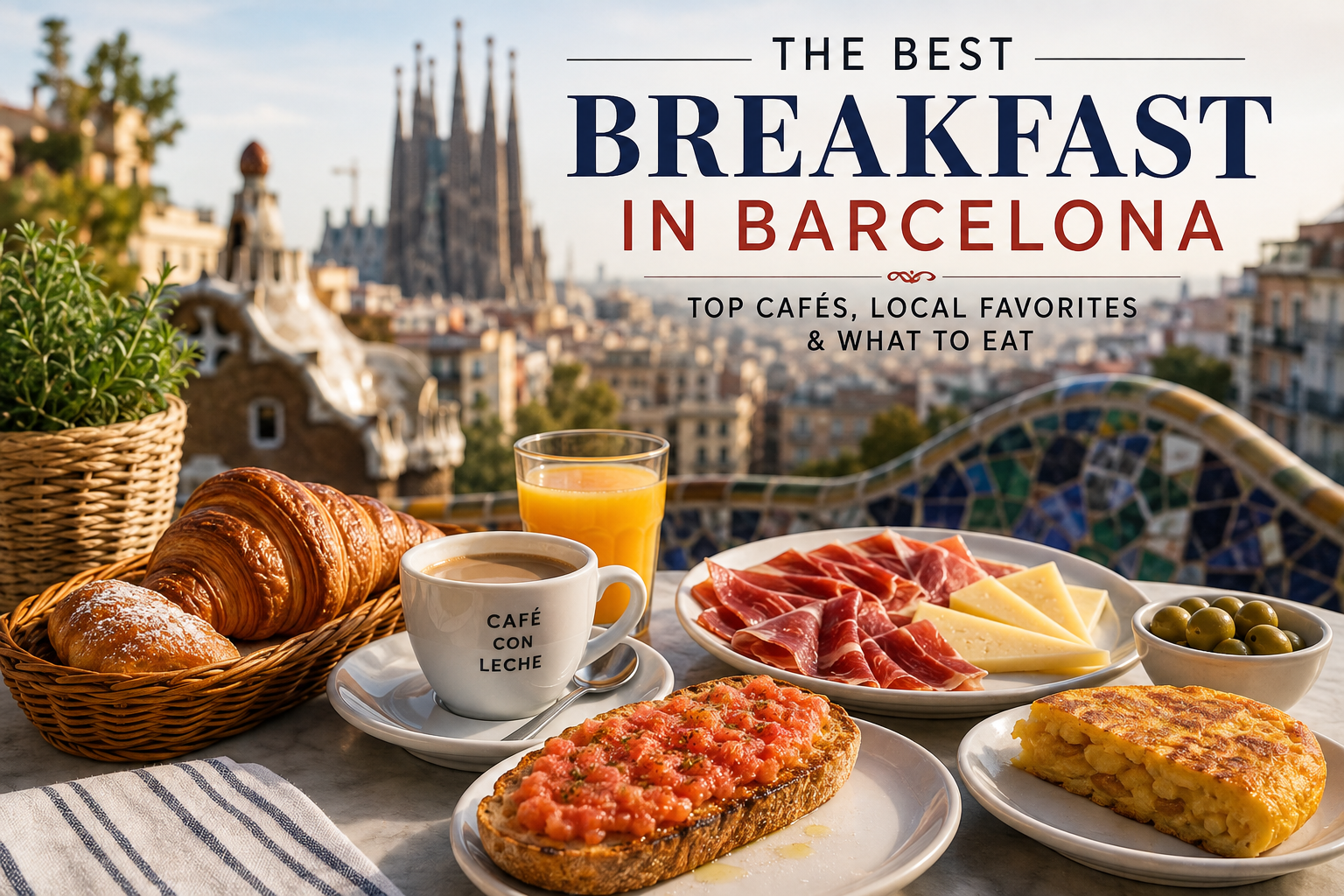
1. The “Double Breakfast” Strategy
Locals don’t eat one big breakfast; they eat two small ones.
- The First Breakfast (8:00 AM – 9:00 AM): A quick cafè amb llet (coffee with milk) and maybe a small pastry or tostada (toast) at home or a local bar.
- The “Esmorzar de Forquilla” (10:30 AM – 11:30 AM): This is the “fork breakfast.” Workers head to the bar for a more substantial sandwich (entrepà), a slice of tortilla, or even a small glass of wine or beer (canyita) to bridge the gap until the late lunch.
2. Navigating the “Menú del Dia”
Available almost exclusively during weekday lunch (1:00 PM – 4:00 PM), this is the most economical way to eat high-quality food.
- Structure: You get a first course (primer plat), a second course (segon plat), dessert (postres) or coffee, and—crucially—bread and a drink (often a full bottle of wine for the table).
- Price Point: Expect to pay between €12 and €18. If you see it for €25+ in a tourist area, it’s likely overpriced.
- The Unwritten Rule: Many authentic spots don’t even print a menu in English; they might have a blurry photocopy or a chalkboard. Don’t be afraid to use a translation app!
3. The Ritual of “Fer el Vermut”
Before Sunday lunch, locals participate in “the hour of vermouth.”
- The Drink: It’s a sweet, fortified red wine infused with herbs, served over ice with an olive and an orange slice.
- The Pairing: It is always accompanied by salty snacks: tinned seafood (cockles or mussels), “Espinaler” sauce-covered chips, or olives.
- Where: Look for a traditional Bodega (wine shop/bar) with old wooden barrels.
4. Proper Table Etiquette
Spanish service is professional but can feel “curt” to those used to American-style hospitality.
- Getting Attention: Waiters will rarely come to your table to ask “how is everything?” They consider it a sign of respect to leave you alone. To get the bill or order more, raise your hand and catch their eye. Never snap your fingers.
- The Bill (La Cuenta): They will never bring the bill unless you ask for it. Bringing the bill unprompted is considered rude, as it implies they are “kicking you out.”
- Bread Charges: In many places, the bread brought to the table isn’t free. It’s usually €1.50–€3.00. If you don’t want it, tell them “No, gràcies” immediately.
5. Better Neighborhood Alternatives
If you find yourself on La Rambla, walk toward these neighborhoods for a 100% better experience:
Neighborhood | Vibe | Best For |
Gràcia | Bohemian village feel | Authentic Catalan home cooking and family-run squares. |
Poble-sec | Up-and-coming & gritty | The famous “Carrer de Blai” for €1–€2 Pincho (small snacks on bread). |
El Born | Trendy but historic | High-end tapas and incredible wine bars hidden in medieval alleys. |
Sant Antoni | Local & foodie | The best “Menu del Dia” spots and the less-crowded Sant Antoni Market. |
Would you like me to create a “perfect day” food itinerary for one of these specific
If you’re visiting Barcelona, a food tour is the perfect way to begin your journey. Our expert team will guide you through the city, offering insider insights and hand-picked recommendations for the best local dining spots. Come and join us at Tours of Barcelona for an authentic taste of the city.