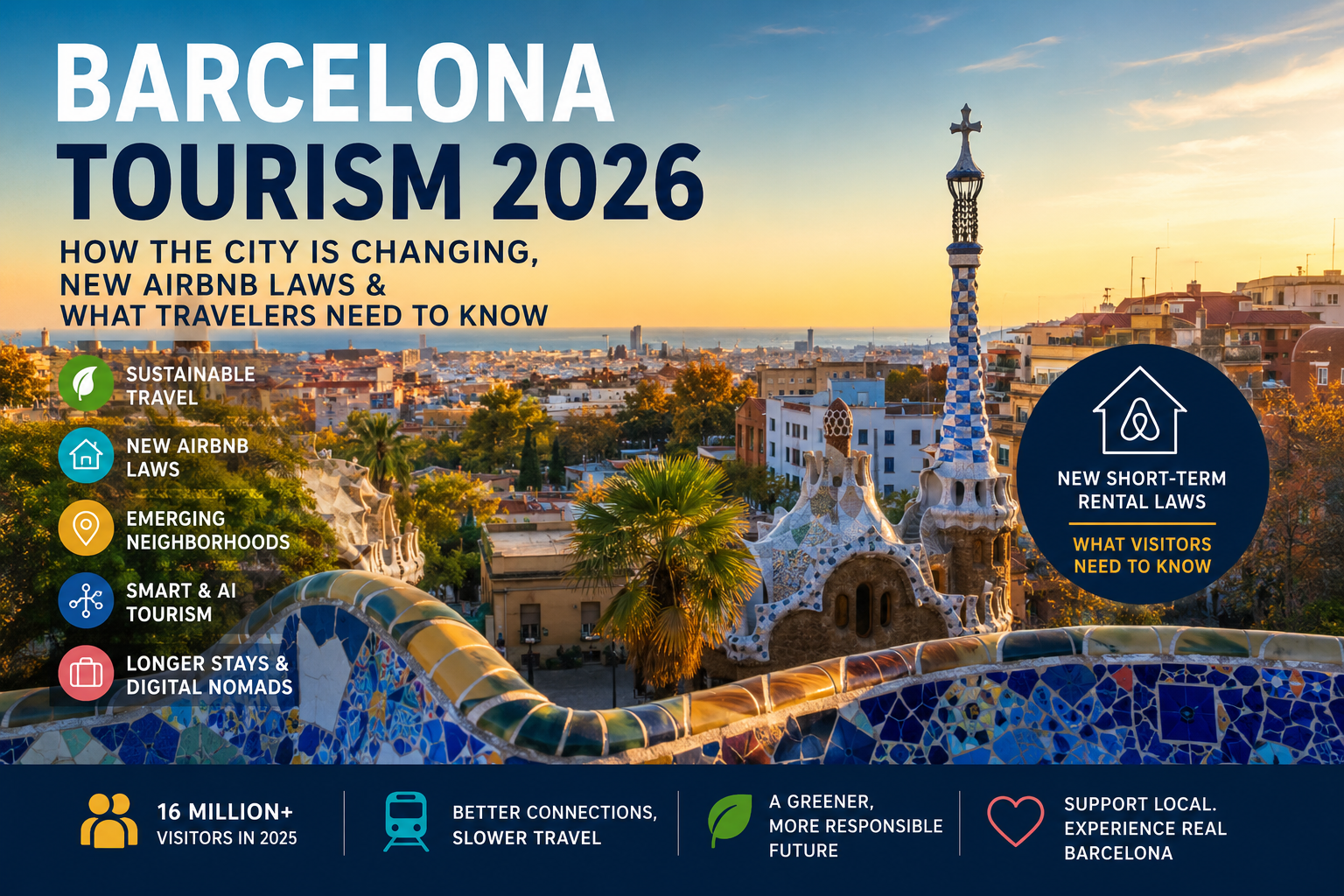
Barcelona Tourism in 2026: How the City Is Changing, New Airbnb Rules, and What Travelers Need to Know
Tourism in Barcelona is entering a new era. For decades, the city has been one of Europe’s most visited destinations, attracting millions with Mediterranean beaches, world-famous architecture, football culture, nightlife, and cuisine. But in 2026, Barcelona is changing how tourism works—and visitors are beginning to notice.
The biggest shift is not new attractions.
It is a new philosophy.
Barcelona is moving away from mass tourism and toward more sustainable, regulated, and locally focused travel. That includes stricter accommodation policies, changes affecting Airbnb and holiday rentals, support for neighborhood tourism, and growing use of smart technology to manage visitor experiences.
For travelers planning a trip, the question is no longer:
“What should I see in Barcelona?”
Instead, many are asking:
“What has changed in Barcelona, and how will tourism look in the future?”
Here is what visitors should know.
Why Barcelona Tourism Is Changing
Barcelona remains one of Europe’s most popular urban destinations, but years of heavy visitor numbers have created pressure on:
- Housing availability
- Rental prices
- Public transport
- Historic neighborhoods
- Local businesses
- Public spaces
As a result, city policies increasingly prioritize quality tourism over quantity tourism.
The goal is to attract visitors who:
- Stay longer
- Spend locally
- Explore beyond crowded hotspots
- Travel sustainably
- Respect residential communities
That shift is reshaping the visitor experience.
Sustainable Tourism Is Becoming the New Standard
One of the largest travel trends influencing Barcelona tourism in 2026 is sustainability.
Travelers increasingly prefer:
- Eco-certified hotels
- Public transportation
- Walking routes
- Local restaurants
- Low-impact experiences
- Responsible tourism choices
Barcelona already has extensive public transport and walkable districts, making sustainable travel easier than in many cities.
Future tourism growth is expected to favor experiences that support local communities rather than overcrowded attractions.
Famous Attractions Still Matter—But Visitors Are Exploring More

Landmarks continue drawing millions every year:
- La Sagrada Família
- Park Güell
- Casa Batlló
- La Rambla
However, travelers increasingly seek experiences beyond famous sites.
The future of tourism in Barcelona appears more neighborhood-driven.
Neighborhood Tourism Is Growing
Barcelona is encouraging visitors to spread beyond traditional tourist zones.
Areas gaining popularity include:
Poblenou
Popular among remote workers, creatives, and the startup culture.
Gràcia
Known for independent cafés, plazas, and local life.
Sant Andreu
Offers a slower atmosphere away from crowded areas.
Sants
Increasingly attractive for visitors seeking authenticity.
Neighborhood tourism helps reduce overtourism while distributing economic benefits more evenly.
For travelers, it often means discovering a more local Barcelona.
New Airbnb and Short-Stay Rental Laws Are Changing Accommodation in Barcelona

One of the most important changes affecting tourism in Barcelona involves Airbnb and short-term holiday rentals.
Accommodation has become a major political issue because rising rents and housing shortages have been linked to the growth of tourist apartments.
Barcelona already restricted new tourist apartment licenses years ago. More recently, authorities announced plans that could phase out thousands of licensed tourist apartments by 2028 as licences expire and are not renewed. The broader objective is to return housing stock to residents and ease pressure on affordability.
For travelers in 2026, this could mean major changes:
- Fewer Airbnb options in central districts
- Higher competition for legal holiday rentals
- Increased hotel demand
- Potential accommodation price increases during peak seasons
- Greater enforcement against illegal rentals
The message is increasingly clear:
Booking accommodation in Barcelona may require more planning than in previous years.
Is Airbnb Legal in Barcelona in 2026?
Airbnb is not banned entirely, but regulations have become stricter.
Visitors should verify whether a property has:
- A valid tourist licence
- Proper registration information
- Legal authorization for short stays
Authorities have increased enforcement against non-compliant rentals across Spain, and accommodation regulations continue evolving. Illegal listings face removal or penalties.
For tourists, choosing licensed accommodation helps avoid last-minute cancellations or legal issues.
Hotels Could Become the Biggest Winners
As restrictions on short-term tourist apartments increase, hotels may regain market share.
Accommodation trends for 2026 favor:
- Hotels
- Aparthotels
- Boutique stays
- Eco-certified accommodation
- Longer-stay residences
- Work-friendly lodging for digital nomads
This shift supports Barcelona’s broader strategy:
Less dependence on mass short-term rentals → More regulated tourism → Greater housing protection for residents
Remote Workers and Digital Nomads Are Influencing Tourism
Travel patterns have changed dramatically.
Many visitors no longer stay for three days.
Instead, travelers increasingly combine:
- Work
- Leisure
- Extended stays
Barcelona remains attractive for:
- Freelancers
- Entrepreneurs
- Tech professionals
- Remote workers
Reasons include:
- Climate
- International connectivity
- Food culture
- Lifestyle
- Access to Europe
Longer stays may become more common than quick weekend tourism.
Smart Tourism and AI Travel Planning Are Growing
Barcelona has long promoted itself as a smart city.
Visitors in 2026 increasingly rely on:
- AI itinerary planning
- Crowd monitoring tools
- Real-time transport information
- Digital reservation systems
- Personalized recommendations
Tourism decisions increasingly happen through live information rather than printed guides.
Questions travelers ask are changing:
“Which area is less crowded?”
“Where can I avoid queues?”
“Which beach has fewer visitors?”
Technology is becoming part of sustainable tourism management.
Food Tourism Continues to Expand

Food increasingly influences destination choice.
Barcelona benefits from demand for:
- Local markets
- Mediterranean cuisine
- Wine experiences
- Cooking workshops
- Regional Catalan dishes
Travelers want authenticity.
Restaurants, markets, and neighborhood dining experiences often become highlights equal to famous monuments. For many visitors, Food tours have become increasingly popular among travelers looking to experience Barcelona beyond its landmarks, using local cuisine as a gateway to understanding the city’s culture, traditions, and history. Experiences such as Eye On Food Tours allow visitors to explore authentic tapas bars, local neighborhoods, and Catalan food culture while gaining a deeper appreciation of the stories behind each dish.
Rail Travel and Slower Tourism Are Reshaping Europe
European travel trends increasingly favor trains over short flights.
Barcelona may benefit from:
- Cross-border rail growth
- Sustainable travel choices
- Multi-city itineraries
- Longer European trips
The future traveler often values slower experiences over rushed schedules.
Climate and Seasonal Travel Patterns Are Changing
Summer remains popular, but travelers increasingly consider:
- Spring travel
- Autumn visits
- Shoulder seasons
- Heat management
Barcelona’s future tourism model may encourage spreading visitors throughout the year rather than concentrating demand during peak months.
Cultural Experiences Matter More Than Attraction Lists
Many tourists now prioritize:
- Workshops
- Local guides
- Neighborhood experiences
- Festivals
- Cooking classes
- Community events
Experience-based tourism continues growing faster than traditional sightseeing.

Is Barcelona Worth Visiting in 2026?
For many travelers, absolutely.
But expectations may need updating.
Barcelona in 2026 is becoming a destination focused less on unlimited tourism and more on balanced tourism—where residents, sustainability, housing, and visitor experiences all matter.
Travelers willing to:
- Explore beyond landmarks
- Support local businesses
- Stay longer
- Travel responsibly
- Choose legal accommodation
may experience a richer and more authentic city.
What the Future of Barcelona Tourism Looks Like
Several trends are likely to define the coming years:
1. More sustainable tourism
Responsible travel becomes mainstream.
2. Stricter accommodation regulation
Airbnb and short-term rental rules continue evolving.
3. Increased neighborhood tourism
Visitors spread beyond traditional hotspots.
4. Longer stays and remote work travel
Digital nomad culture grows.
5. AI-assisted tourism
Smarter planning changes how people travel.
6. Greater focus on local quality of life
Cities increasingly prioritize residents alongside visitors.
Final Thoughts: Barcelona Is Reinventing Tourism
Barcelona’s future is not about attracting the highest number of visitors.
It is about redefining tourism itself.
The city appears to be moving toward a model built on sustainability, regulation, technology, local identity, and more balanced growth.
For travelers, this means visiting Barcelona may become less about rushing between attractions and more about experiencing the city with intention.
That shift could benefit everyone:
Visitors, residents, and Barcelona’s long-term future.
FAQ
Is Barcelona worth visiting in 2026?
Yes. Barcelona remains one of Europe’s top destinations, particularly for culture, food, architecture, and longer stays.
What are the new Airbnb rules in Barcelona?
Regulations on tourist apartments have tightened, with policies aiming to reduce or phase out many short-term rentals over time.
Is Airbnb legal in Barcelona in 2026?
Legal Airbnb listings exist, but visitors should verify licensing and compliance before booking.
Why is Barcelona changing tourism policies?
Authorities aim to address housing pressure, overtourism, sustainability concerns, and quality of life for residents.
What are the biggest Barcelona travel trends in 2026?
Sustainable tourism, AI trip planning, neighborhood exploration, remote work travel, and stricter accommodation regulations.
“If all this talk of Spanish flavors has you craving a trip to the Mediterranean, you won’t want to miss this. We have put together the ultimate resource for travelers: The Complete Guide to Tapas in Spain. Whether you’re a seasoned traveler or planning your first trip, it’s the perfect roadmap to eating your way through the country like a local.”
Friends don’t let friends eat frozen paella on Las Ramblas.
Let’s be honest: your stomach deserves better than a microwave-heated meal and a 10-euro “sangria” that’s actually just red juice and sadness.
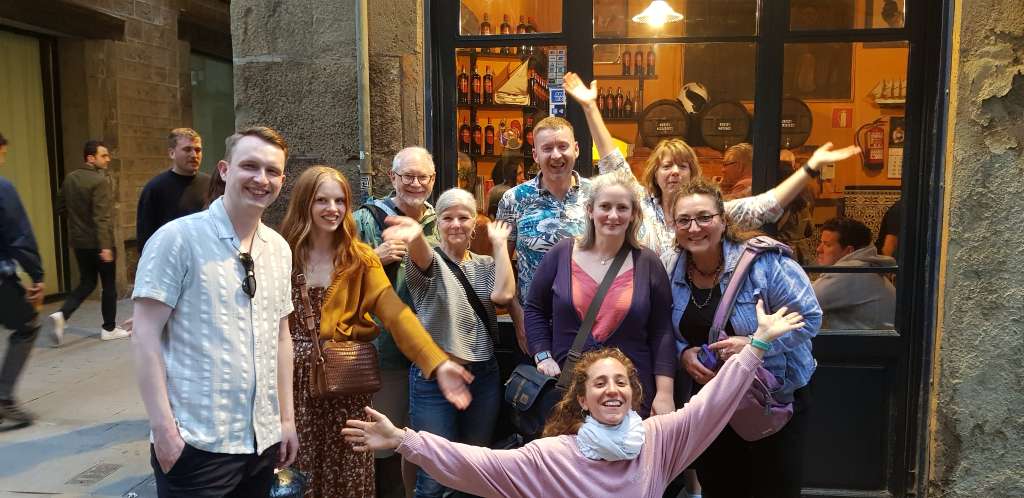
At Eye on Food Tours, we believe in “Love at First Taste.” We’ll take you through the winding backstreets of Barcelona and Madrid to find the family-run taverns where the locals actually hide. You’ll get 10+ tastings, enough wine to make your history lessons interesting, and the secret satisfaction of knowing you’re eating better than every other tourist in the city.
Don’t just look at the food—eat it: Book your spot here!