


Walking into a traditional Spanish charcutería or a bustling market like Barcelona’s Santa Caterina is a sensory overload. Hanging from the rafters are dozens of cured ham legs, their rich, savory aroma filling the air.
But when you look closer at the menu or the glass display cases, confusion sets in. You see prices ranging from €4 a plate to upwards of €40. You notice terms like Bellota, Cebo, Pata Negra, and a series of colored plastic tags wrapped around the ham’s ankles.
If you don’t know how to choose Spanish Jamón Ibérico, it’s incredibly easy to overpay for average ham—or, worse, miss out on a world-class culinary experience by accidentally ordering the wrong thing.
This guide is your ultimate cheat sheet for navigating the world of Spanish ham labels. By the end of this post, you’ll know exactly how to read the tags, understand the cuts, and spot the real deal like a local.

Before looking at the high-end stuff, we have to clear up the most common point of confusion for travelers: the difference between Serrano and Ibérico ham. Not all Spanish ham is created equal, and they come from entirely different breeds of pigs.

To protect consumers from fraud, the Spanish government enforces a strict, four-color labeling system. Every single leg of authentic Jamón Ibérico must wear a plastic, tamper-proof seal (vitola) around its ankle.
When you are ordering at a tapas bar or buying at a market, look for these colors to know exactly what you are getting:
This is the legendary answer to what is Pata Negra ham (Black Paw). It means the pig is a 100% purebred Iberian pig that spent its final months free-roaming in the dehesa (oak forests), gorging itself exclusively on acorns (bellotas) and wild grass. It is incredibly rare, complex, and melts at room temperature.
Just like the black tag, these pigs roamed the oak forests and ate acorns. The only difference is the breed purity—these pigs are usually 50% or 75% Iberian breed (usually crossed with a Duroc pig). The flavor is still mind-blowing, often preferred by some who like a slightly milder profile.
These pigs live outdoors and graze in the fields, but their diet consists primarily of natural grains, grass, and legumes rather than a pure acorn diet. It offers a fantastic middle ground of quality and price.
This is your entry-level Ibérico. These pigs are raised on commercial farms and fed a diet strictly of grain. While still vastly superior to standard Jamón Serrano because of the Iberian genetics, it lacks the depth of flavor found in the free-roaming categories.

If you watch a master ham carver (maestro cortador) at work, you’ll notice they cut from different sides of the leg. If you are buying a whole leg or ordering a specific portion, it helps to know the cuts:

Tourist traps love to sell overpriced, sweat-dried ham to unsuspecting travelers. Here is exactly how to inspect your plate to ensure you’re getting top-tier quality:
Real Bellota (acorn-fed) ham is packed with monounsaturated fats that have a very low melting point. When a plate of real Ibérico sits at room temperature, the fat should literally begin to melt. It will look glossy and translucent, almost like it’s sweating. If the fat looks chalky, dry, or bright white, it’s not premium acorn-fed ham.
If you notice tiny, white, crunchy dots embedded in the red meat of your ham, don’t worry—it’s not salt, and it’s not a defect. Those are tyrosine crystals. They are a natural byproduct of a long, slow curing process. Seeing them is a universal sign that the ham has been aged properly and patiently.
True pata negra should never come out of a commercial deli slicer in massive, paper-thin transparent sheets. It must be hand-carved with a long, flexible knife into small, bite-sized rectangles (about the size of a credit card). Hand-carving ensures the fat is distributed perfectly across the bite and preserves the texture.

Once you have a plate of the good stuff in front of you, there are a few golden rules to follow:
At the end of the day, Jamón Ibérico is more than just food—it is a slow-crafted piece of Spanish heritage. Now that you know how to read the tags and spot the genuine melt-in-your-mouth texture, you are fully equipped to eat like a true local. Grab a glass of wine, find a cozy stool at a corner taberna, and enjoy every single savory bite.

Want to know more about Spain’s most iconic delicacy? Explore the fascinating history of Jamón — from ancient Rome to your plate: Read the Full Story Here
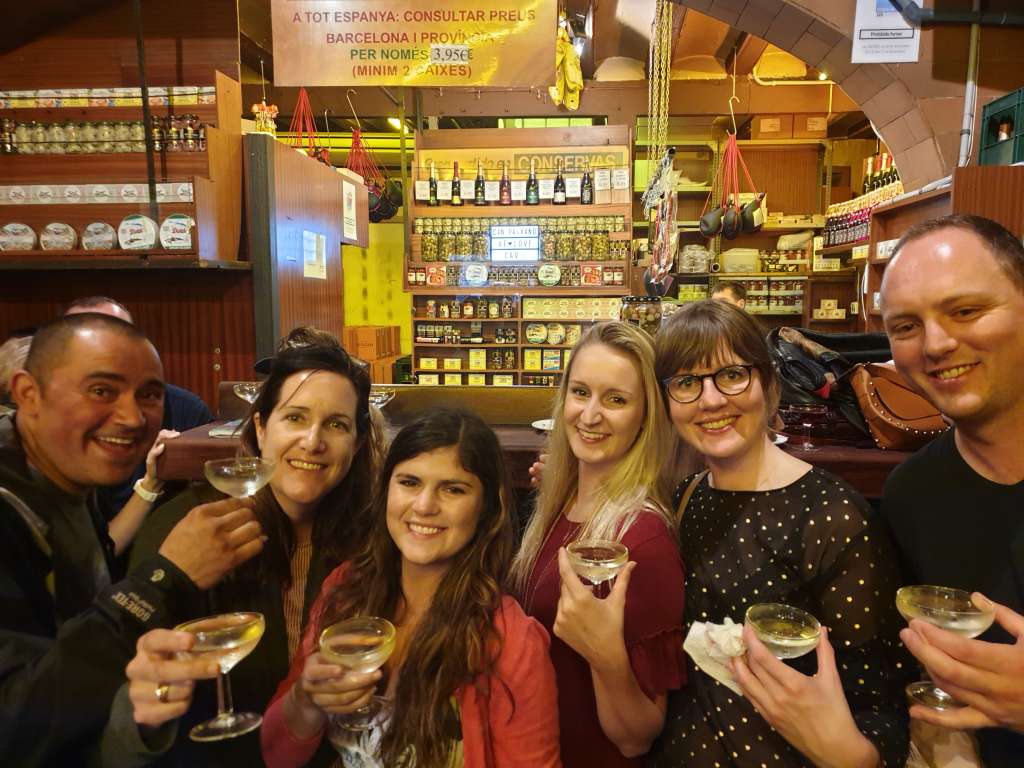
Want to taste the absolute pinnacle of Spanish charcuterie without guessing the labels? Join us on our Taste of Barcelona Tour or our Madrid food experiences, where we skip the tourist traps and introduce you directly to the master carvers who source the finest 100% Iberico ham Spain has to offer.

Day Trip from Barcelona to Tarragona: Discover Ancient Rome on Spain’s Mediterranean Coast (2026) Barcelona may steal most of the spotlight in Catalonia, but just

The Best Breakfast in Barcelona: Top Cafés, Bakeries & Local Breakfast Guide (2026) The Best Breakfast in Barcelona: Where Locals and Travelers Start Their Day
The History of Paella: Why Valencians Get Angry About It (And What Every Traveler Should Know) Spain has given the world countless culinary treasures—Jamón Ibérico,

Montserrat Day Trip from Barcelona & Penedès Wine Tour (2026 Complete Guide) When people think of Barcelona, they often picture the bustling streets of Las


