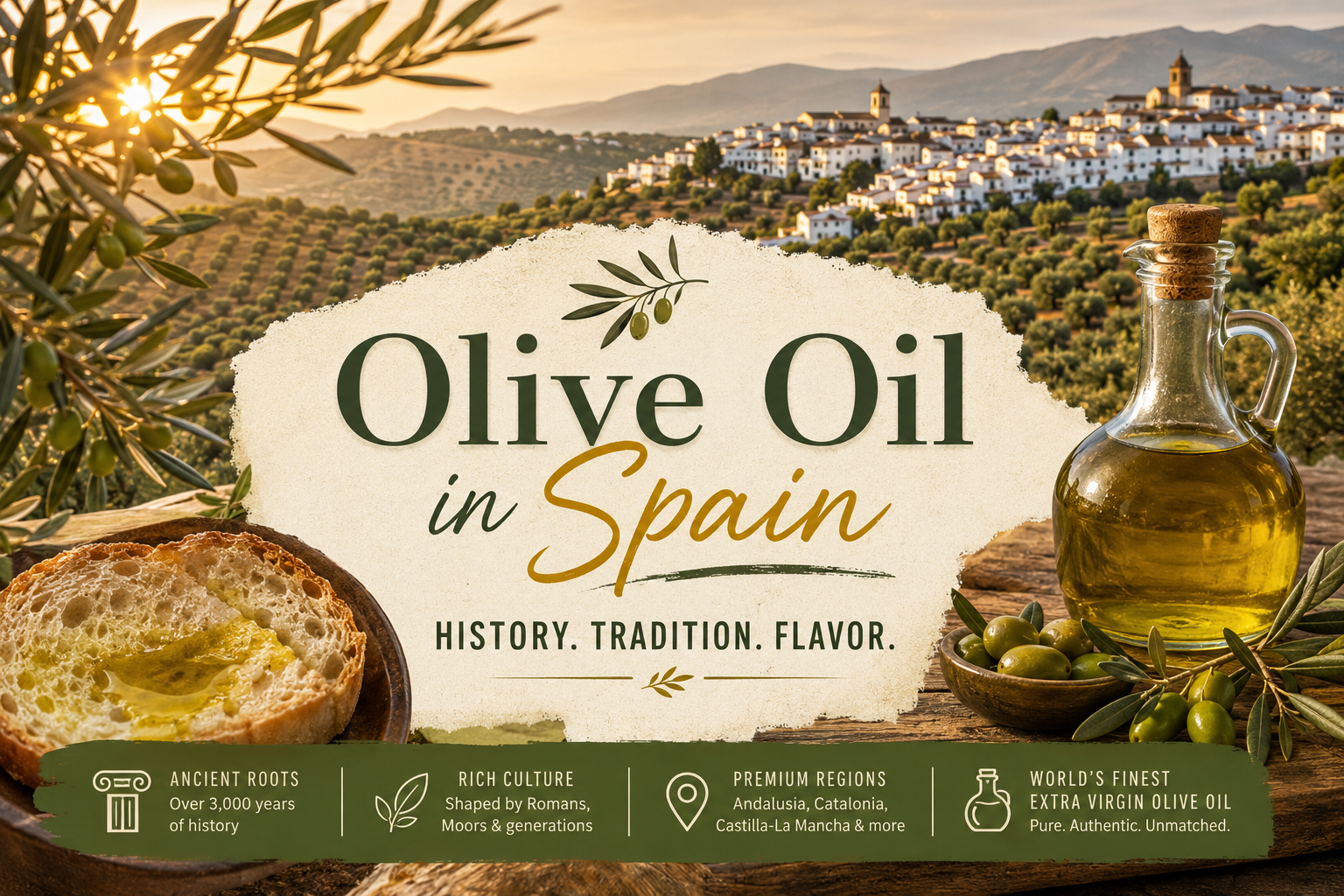
Olive Oil in Spain: A Story Written Through Generations
The first thing many people remember about Spain is the atmosphere.
It could be the sound of distant church bells in a small village, the warmth of the Mediterranean sun, or the smell drifting from local kitchens — garlic sizzling in a pan, fresh bread on the table, and rich golden olive oil poured generously over almost everything.
In Spain, olive oil is far more than an ingredient.
It is tradition, family history, culture, and identity.
From the endless olive groves of Andalusia to quiet countryside farms in Catalonia, olive oil has shaped Spanish life for thousands of years. Every bottle carries a story of ancient civilizations, hard-working families, and a deep connection to the land.
Today, Spain is the world’s largest producer of olive oil, but its relationship with olive trees began long before modern Spain even existed.
The Ancient Roots of Olive Oil in Spain

The history of olive oil in Spain stretches back more than 3,000 years.
Historians believe the first olive trees arrived with the Phoenicians, ancient Mediterranean traders who settled along Spain’s southern coast around 1100 BCE. They recognized the Iberian Peninsula’s ideal conditions for olive cultivation: hot summers, mild winters, and fertile soil.
Later, the Romans transformed olive oil into one of the most important industries of the empire.

The region now known as Andalusia became a major supplier of olive oil across the Roman Empire. Spanish olive oil traveled through Europe and North Africa in clay amphorae shipped from Roman ports.
Archaeologists have even discovered evidence in Rome itself. A famous artificial hill called Monte Testaccio was formed largely from broken amphorae that once carried olive oil from Spain.
The Moorish Influence That Changed Spanish Agriculture
Centuries later, the Moors arrived in the Iberian Peninsula and revolutionized agriculture throughout Spain.
They introduced:
- Advanced irrigation systems
- Water channels and reservoirs
- Sophisticated farming methods
- Improved olive cultivation techniques
Even the Spanish word for olive oil — aceite — comes from the Arabic word az-zait, meaning “olive juice.”
Their influence remains deeply visible in southern Spain today, especially throughout Andalusia, where olive groves stretch endlessly across rolling hills.
Some olive trees in Spain are believed to be hundreds, even thousands, of years old.
These trees are not only agricultural treasures — they are living witnesses to Spanish history.


Olive Oil in Everyday Life in Spain
For generations, olive oil was not considered a luxury food in Spain.
It was survival.
Families used olive oil for:
- Cooking daily meals
- Preserving food
- Lighting lamps
- Religious ceremonies
- Natural medicine and skincare
In rural villages, the olive harvest season became one of the most important moments of the year. Entire families worked together in the groves, sharing food, stories, and traditions passed down from one generation to the next.
Even today, many Spanish communities still live according to the rhythm of the olive harvest.
The connection feels deeply personal.
Many farmers continue caring for trees planted by their grandparents or great-grandparents decades ago.

Why Spanish Olive Oil Is Famous Worldwide
Spain now produces nearly half of the world’s olive oil, making it the global leader in extra virgin olive oil production.
But quantity alone does not make Spanish olive oil special.
The quality comes from:
- Ideal Mediterranean climate
- Traditional farming knowledge
- Diverse olive varieties
- Modern production standards
- Strong cultural respect for olive oil
Spanish extra virgin olive oil, often called EVOO, is especially prized for its purity and flavor.
Unlike lower-quality oils, extra virgin olive oil is produced without chemicals or excessive heat, preserving its natural antioxidants and aromas.
Depending on the region and olive variety, Spanish olive oils may taste:
- Fruity
- Peppery
- Buttery
- Grassy
- Nutty
- Slightly bitter
The Most Famous Olive Oil Regions in Spain
Andalusia
The heart of Spanish olive oil production, especially around Jaén and Córdoba. Endless olive groves dominate the landscape.
Catalonia
Known for elegant and aromatic oils with softer, delicate flavors perfect for seafood and vegetables.
Castilla-La Mancha
Produces stronger and more rustic olive oils commonly used in traditional Spanish cuisine.
Extremadura
An emerging region gaining recognition for premium extra virgin olive oils.


Each region offers its own flavor profile, influenced by soil, climate, olive variety, and local tradition.
Olive Oil and the Mediterranean Lifestyle
In Spain, olive oil is everywhere.
It is drizzled over toasted bread at breakfast, poured over fresh tomatoes, mixed into salads, added to soups, and used in countless tapas dishes.
For many Spaniards, olive oil belongs on the table as naturally as water or salt.
It is also one of the foundations of the Mediterranean diet, widely associated with heart health, longevity, and balanced living.
Simple meals become unforgettable with good olive oil.
A piece of bread, ripe tomato, sea salt, and fresh Spanish EVOO can tell the story of an entire culture.
How to Choose the Best Spanish Olive Oil

When buying Spanish olive oil, look for:
- “Extra Virgin” on the label
- Recent harvest dates
- Dark glass bottles
- Cold extraction methods
- Region of origin
Premium olive oil may cost slightly more, but the flavor difference is immediate.
High-quality Spanish EVOO can completely transform simple dishes and bring authentic Mediterranean flavor into everyday cooking.
More Than Food: A Spanish Cultural Symbol
Olive trees grow slowly and can live for centuries.
Because of this, they became symbols of:
- Peace
- Patience
- Longevity
- Family heritage
- Connection to the land
That symbolism still matters deeply in Spain today.
Behind every bottle of Spanish olive oil is a human story:
farmers waking before sunrise, families gathering during harvest season, old traditions surviving in modern kitchens.
In Spain, olive oil is not simply consumed. It is lived.

FAQ Section
Why is Spain famous for olive oil?
Spain is the world’s largest producer of olive oil thanks to its climate, centuries of farming tradition, and high-quality extra virgin olive oils.
What region in Spain produces the most olive oil?
Andalusia, especially Jaén, produces the largest amount of olive oil in Spain and globally.
What does extra virgin olive oil mean?
Extra virgin olive oil is the highest quality olive oil made through natural extraction without chemicals or high heat.
Is Spanish olive oil healthy?
Yes. Spanish olive oil contains healthy fats and antioxidants and is a key part of the Mediterranean diet.
How old is olive oil production in Spain?
Olive oil production in Spain dates back more than 3,000 years, beginning with Phoenician and Roman influence.
“If all this talk of Spanish flavors has you craving a trip to the Mediterranean, you won’t want to miss this. We have put together the ultimate resource for travelers: The Complete Guide to Tapas in Spain. Whether you’re a seasoned traveler or planning your first trip, it’s the perfect roadmap to eating your way through the country like a local.”
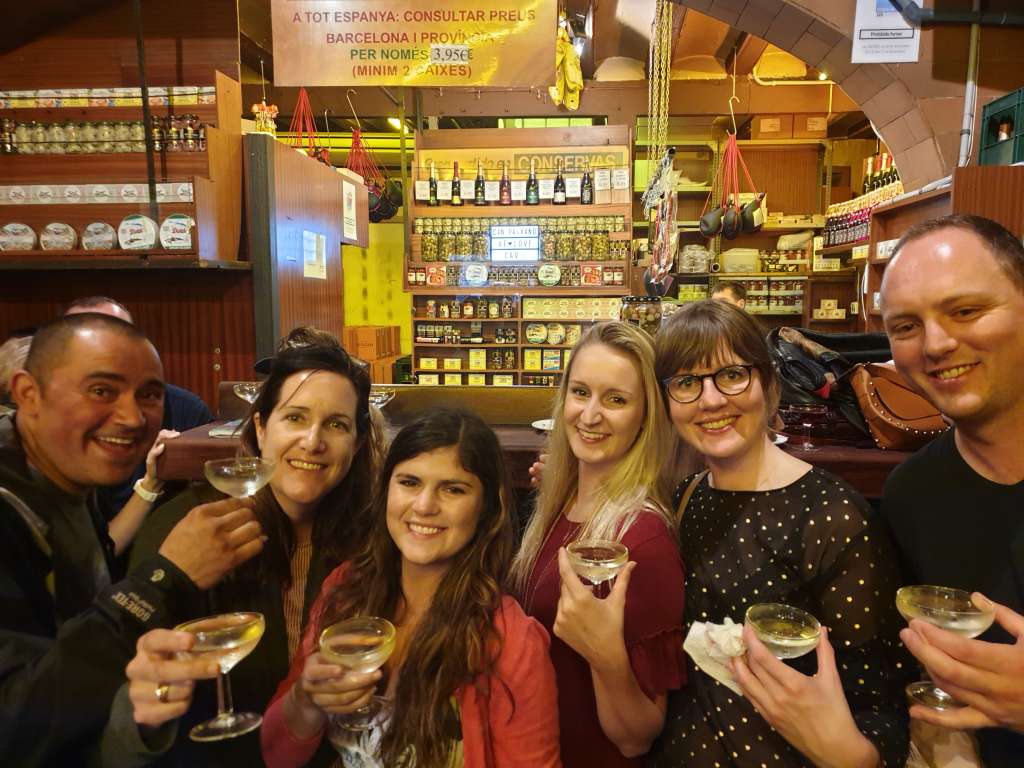
Friends don’t let friends eat frozen paella on Las Ramblas.
Let’s be honest: your stomach deserves better than a microwave-heated meal and a 10-euro “sangria” that’s actually just red juice and sadness.
At Eye on Food Tours, we believe in “Love at First Taste.” We’ll take you through the winding backstreets of Barcelona and Madrid to find the family-run taverns where the locals actually hide. You’ll get 10+ tastings, enough wine to make your history lessons interesting, and the secret satisfaction of knowing you’re eating better than every other tourist in the city.
Don’t just look at the food—eat it: Book your spot here!